









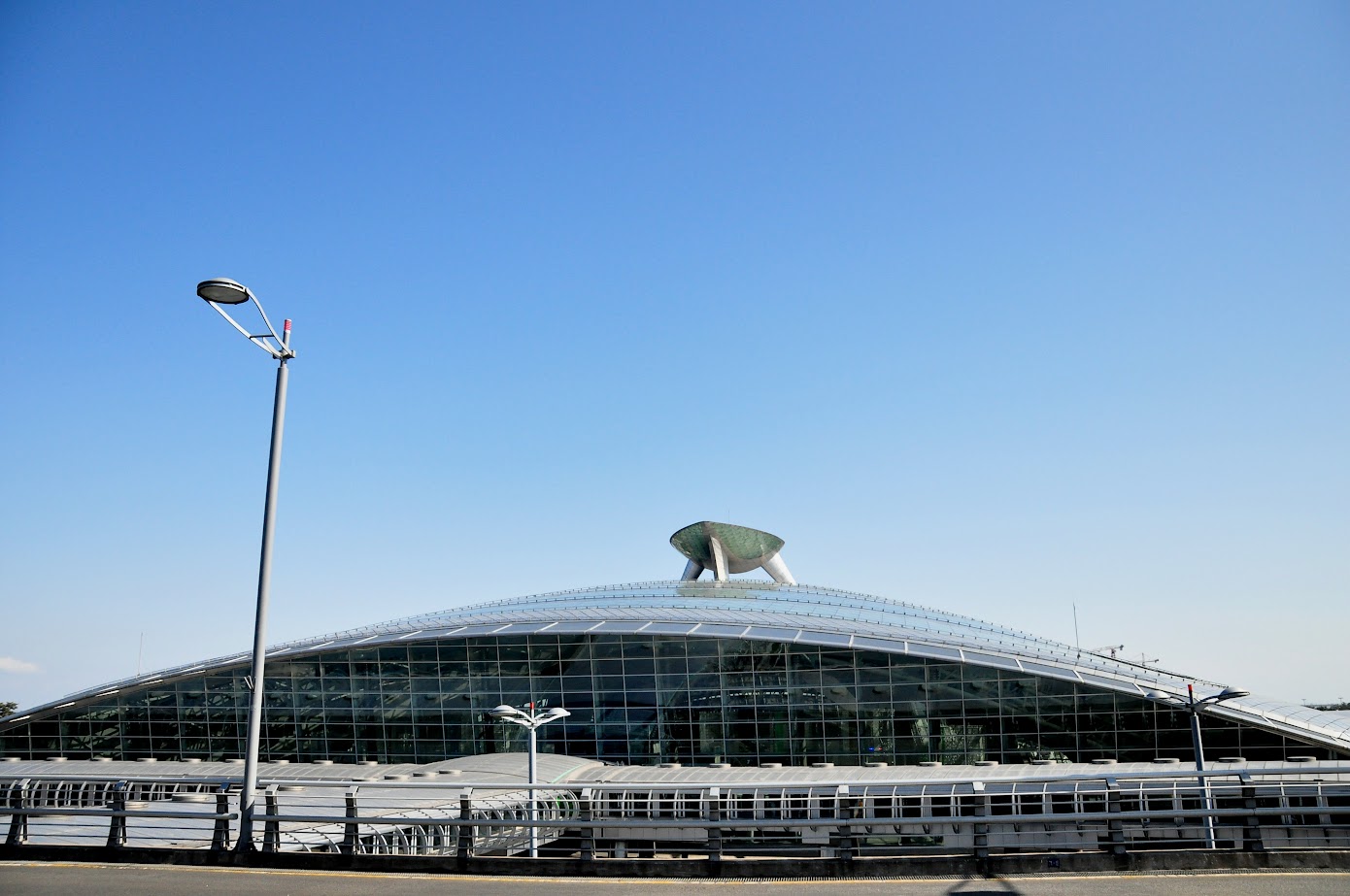
To 'fly away' to the beautiful city of Seoul, the fastest way is to land at Incheon Airport. Let's explore more information related to the largest airport in South Korea for a complete travel experience!
Mon
Tue
Wed
Thu
Fri
Sat
Sun
00
00
01
02
03
04
05
06
07
08
09
10
11
12
13
14
15
16
17
18
19
20
21
22
23
24
25
26
27
28
29
30
00
00
00
To 'fly away' to the beautiful city of Seoul, the fastest way is to land at Incheon Airport. Let's explore more information related to the largest airport in South Korea for a complete travel experience!
The capital city of Seoul, South Korea currently has 2 airports: Gimpo International Airport and Incheon International Airport. Among them, Gimpo International Airport serves many domestic flights while Incheon Airport has more international flights.
Incheon International Airport is one of the busiest airports in the world, playing a very important role in the development of South Korea.
Incheon International Airport is one of the largest construction projects in South Korea, marking a new era of economic boom in the Northwest region. The airport was built in 1992 and completed in 2001 with a total cost of approximately 5 billion USD. Incheon is the 14th busiest international airport among the 50 busiest airports in the world, having served 404,104 flights with a total of 71,169,722 passengers.
Incheon International Airport covers an area of 54ha with 4 runways sized as follows: (15R/33L): 3,750m x 60m, (15L/33R): 3,750m x 60m, (16R/34L): 4,000m x 60m, (16L/34R): 3,750m x 60m. Currently, the airport has 62 parking spots for aircraft and collaborates with about 88 airlines from over 52 countries worldwide.
Incheon International Airport has two passenger terminals, T1 and T2. Among them:
Incheon International Airport is rated as the best airport partly due to its modern high-end amenities such as: capsule hotels, sauna, relaxation spa, children's play area, Galore garden for visitors to stroll and enjoy the scenery, self-check-in and baggage drop services...
Incheon Airport is about 60 km from the city center, after landing, passengers can consider the following transportation options:
The AREX train station is located in the B1 basement, very convenient for passenger movement. AREX currently has 2 main types of trains:
Express Train
All Stop Train
From Incheon Airport, there are many bus routes to the city center to serve passengers. Some bus routes for passengers to consider are as follows:
Incheon Airport Limousine Bus
Public Bus
Taxis are a comfortable means of transport but can be quite expensive. Taxi fares will depend on the type of vehicle and the destination area.
Myeongdong is the most famous shopping area in Seoul that travelers should not miss when visiting. This location is about 49.5 km from Incheon Airport, easily accessible by bus, subway, or taxi. Here, you can enjoy a rich street food scene, shop for cosmetics, and clothing from globally renowned brands.
Namsangol Hanok Village is about 50 km from Incheon Airport, an outstanding outdoor museum in the heart of modern Seoul. Namsangol Hanok consists of 5 recreated Hanok houses for educational purposes, and many other unique cultural activities take place here.
Incheon Airport is about 51 km from Changdeokgung and very convenient for travel. Changdeokgung Palace, a UNESCO World Heritage site, is one of the largest palaces from the Joseon era and is definitely a must-visit destination for travelers when visiting Seoul.
To update flight schedules at Incheon Airport as well as the latest ticket prices for new flights, please visit https://www.vietjetair.com/vi/ve-may-bay/ve-may-bay-di-seoul/.
| Route | Flight Duration | Daily Frequency |
|---|---|---|
| Phu Quoc (PQC) - Seoul (Incheon) (ICN) | 5 hours 21 minute | 2 flights per day |
| Ha Noi (HAN) - Seoul (Incheon) (ICN) | 4 hours 19 minute | 2 flights per day |
| Nha Trang (CXR) - Seoul (Incheon) (ICN) | 4 hours 44 minute | 1 flights per day |
| Hai Phong (HPH) - Seoul (Incheon) (ICN) | 4 hours 18 minute | 1 flights per day |
| Ho Chi Minh (SGN) - Seoul (Incheon) (ICN) | 5 hours 9 minute | 2 flights per day |
| Da Nang (DAD) - Seoul (Incheon) (ICN) | 4 hours 18 minute | 1 flights per day |
| BangKok (BKK) - Seoul (Incheon) (ICN) | 5 hours 33 minute | 1 flights per day |

clear sky

scattered clouds

moderate rain

broken clouds
clear sky
clear sky
clear sky
light rain
Powered by: OpenWeatherMap.org


